

What are asphalt shingles?
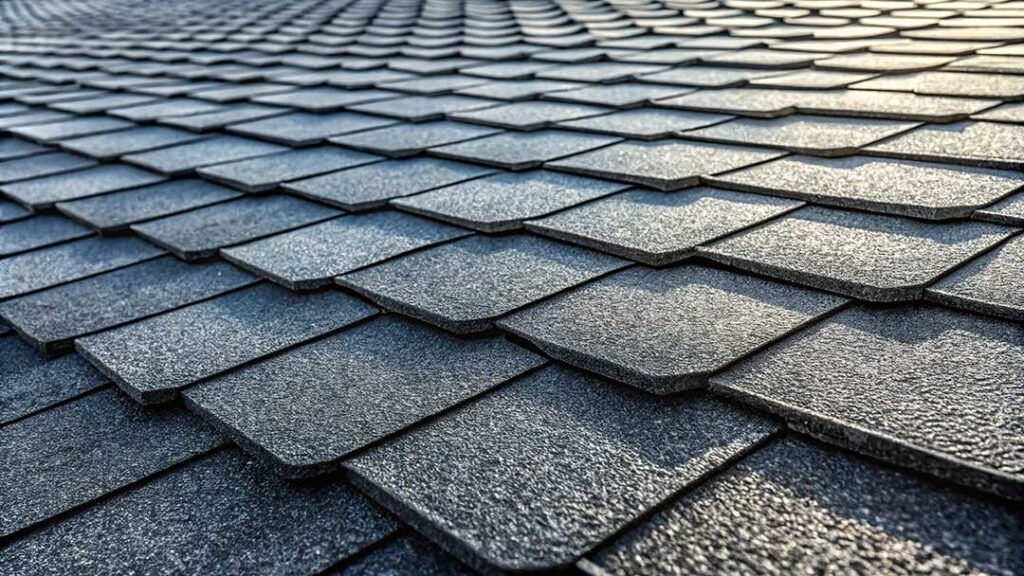
Asphalt shingles are layered roofing materials made from a fiberglass base coated with asphalt and finished with mineral granules. They are designed to shed rain, resist sunlight, and protect the roof deck beneath them.
Most residential roofs use one of two common styles:
- Three-tab shingles: Flat, uniform pieces with a repeated pattern. They are generally lighter and simpler in appearance.
- Architectural shingles: Laminated shingles with multiple layers that create a more dimensional look. They are often heavier and provide greater resistance to wind and weather.
Some shingles are also made with impact-resistant materials or enhanced wind ratings. These features can be useful, but the label alone does not determine how well a roof will perform. Installation quality, ventilation, flashing, roof slope, and maintenance matter just as much.
How long does an asphalt shingle roof last?
A typical asphalt shingle roof may last roughly 15 to 30 years, although actual service life varies widely. The age of the roof is only one part of the assessment.
Factors that affect longevity include:
- Shingle quality and design
- Roof pitch and orientation
- Attic ventilation
- Ice, snow, wind, and hail exposure
- Moss, algae, and debris accumulation
- Whether flashing and valleys were installed correctly
- The number of existing roof layers
- How quickly small problems were repaired
In Webster, MI, roofs experience repeated seasonal changes, including freezing temperatures, snow, rain, wind, and summer heat. These cycles can cause roofing materials to expand and contract. A roof that appears acceptable from the ground may still have worn seal strips, brittle edges, exposed nails, or deteriorated flashing.
Manufactured life ratings should not be treated as guarantees. A shingle advertised for 25 or 30 years may require favorable conditions and proper installation to approach that lifespan.
What are the main parts of an asphalt shingle roof?
Shingles are only the visible surface of a roofing system. The layers beneath them help control water, ventilation, and air movement.
A typical system includes:
- Roof deck: The structural surface, commonly made from plywood or oriented strand board.
- Underlayment: A water-resistant layer placed over the deck beneath the shingles.
- Drip edge: Metal installed along roof edges to guide water away from the deck and fascia.
- Flashing: Material used around chimneys, walls, skylights, valleys, and roof penetrations.
- Ventilation components: Intake vents near the eaves and exhaust vents near the ridge or upper roof.
- Starter shingles: Special shingles installed along the lower edge to help seal the first course.
- Ridge caps: Shingles designed for the peak or ridge of the roof.
A roof can have good-looking shingles but still leak if flashing is poorly installed or the underlayment is damaged. Valleys and roof-to-wall intersections deserve particular attention because they collect and direct large amounts of water.
What roof problems should residents watch for?
Some warning signs are visible from the ground, while others appear indoors. A few damaged shingles do not always mean the entire roof needs replacement, but they should not be ignored.
Common exterior signs include:
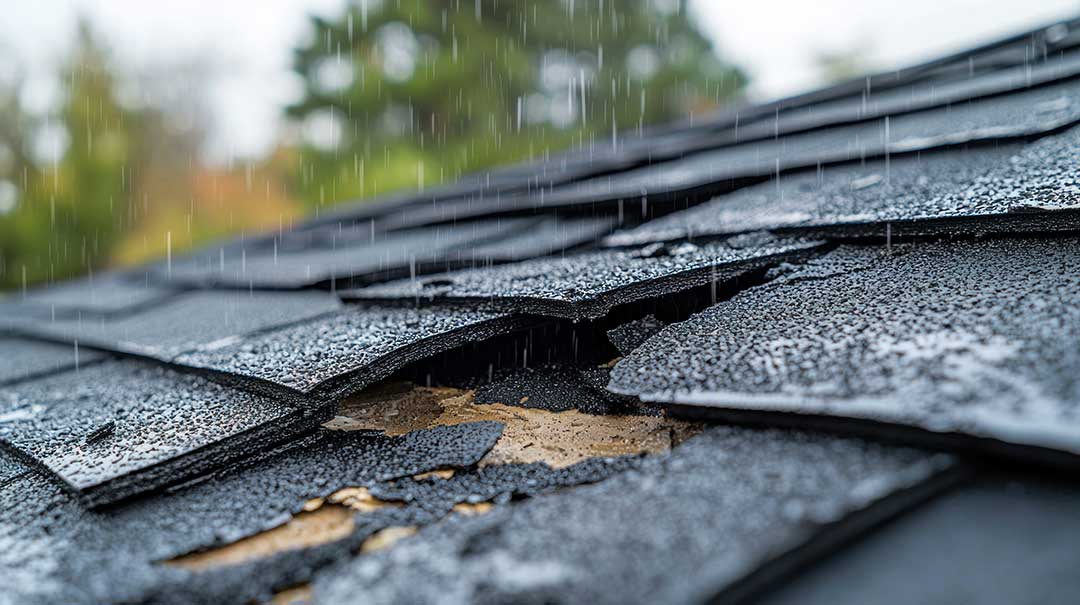
- Missing, cracked, curled, or lifted shingles
- Bald spots where mineral granules have worn away
- Loose flashing around chimneys, vents, or walls
- Sagging areas along the roofline
- Dark streaks or patches caused by algae or moisture
- Granules collecting in gutters or at downspout outlets
- Exposed nail heads or deteriorated seal strips
Indoor clues may include brown ceiling stains, peeling paint, damp attic insulation, musty odors, or daylight visible through the roof deck. Water stains can appear far from the actual leak because water may travel along rafters or roof decking before entering the living space.
A leak that appears only during wind-driven rain may point to a problem with flashing, a valley, a pipe boot, or a lifted shingle rather than a simple hole in the roof.
Does roof ventilation really matter?
Yes. Proper attic ventilation helps regulate heat and moisture beneath the roof. It does not replace insulation, and adding vents without adequate intake airflow may not solve the problem.
During winter, warm moist air from the living space can enter the attic through gaps around lights, wiring, ducts, or attic hatches. If that moisture condenses on cold roof materials, it can contribute to mold, wood deterioration, and damp insulation. Uneven attic temperatures can also contribute to snow melting and refreezing near the eaves, which may create ice dams.
During summer, excessive attic heat can increase stress on shingles and raise indoor cooling loads. A balanced system generally uses low intake ventilation at the soffits and high exhaust ventilation near the ridge or upper roof.
Blocked soffit vents, compressed insulation, bathroom exhaust fans venting into the attic, and poorly sealed attic access panels are common concerns.
Can new shingles be installed over old shingles?
Sometimes, but the answer depends on the roof’s condition, local requirements, and the number of existing layers. Installing a second layer may reduce removal costs and shorten the work, but it can also conceal damaged decking or flashing.
A roof generally requires more careful evaluation when it has:
- More than one existing shingle layer
- Soft or sagging decking
- Widespread water damage
- Poorly attached shingles
- Buckled or uneven surfaces
- Multiple areas of failed flashing
- Evidence of inadequate ventilation
Removing existing shingles allows the roof deck and flashing to be inspected directly. It also prevents surface irregularities from being carried into the new roof.
How should an asphalt shingle roof be maintained?
Routine maintenance is mainly about identifying small problems before water reaches the roof deck or interior of the home.
A practical inspection routine includes checking the roof from the ground after severe weather and looking in the attic at least periodically. Avoid walking on shingles unnecessarily, particularly when temperatures are very cold or very hot, because they can become brittle or soften.
Keep gutters and downspouts clear so water does not back up beneath the roof edge. Trim branches that rub against shingles or drop heavy debris. Do not pressure-wash asphalt shingles, since forceful cleaning can remove protective granules.
After strong wind, heavy snow, or hail, look for displaced materials and check ceilings for new stains. Roof work involving steep slopes, unstable surfaces, electrical hazards, or winter conditions can create serious safety risks and may require qualified assistance.
Are permits required for roofing work in Webster?
Permit requirements can depend on the scope of the work and the local authority handling the property. In Webster, zoning compliance and building permit procedures may apply to construction or alteration work, and state construction requirements govern many building activities.
Before beginning a full replacement, structural repair, or significant alteration, property owners should verify the current requirements with the appropriate township or county building authority. Permit rules can differ from one type of repair to another, and assumptions based on a nearby property may not apply.
What is the most common misconception about asphalt shingles?
The most common misconception is that visible shingle condition tells the whole story. Shingles may look acceptable while flashing is failing, the roof deck is soft, or attic moisture is damaging the underside.
The reverse can also occur: a roof may show minor surface wear but still have several years of useful service if the deck, underlayment, flashing, and ventilation remain sound.
A reliable evaluation considers the entire roofing system, not just color, age, or a few missing granules.