

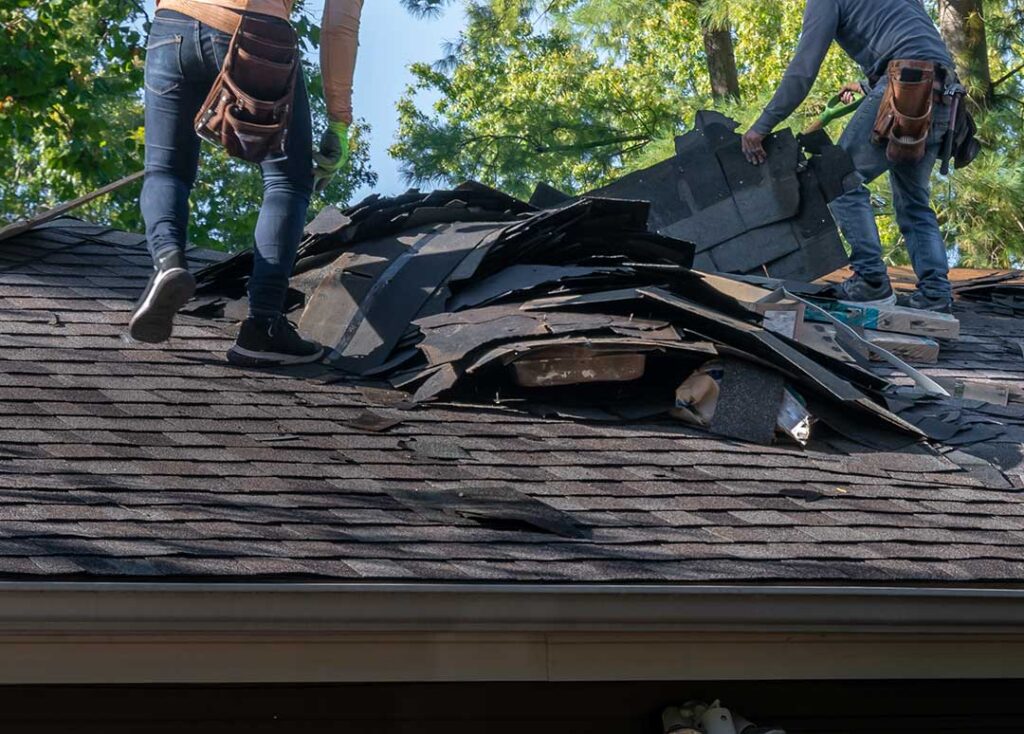
What happens during a roof tear-off?
A roof tear-off is the removal of existing roofing materials before a new roof system is installed. The process usually includes site preparation, removal of shingles and underlayment, inspection of the roof deck, repairs where needed, and cleanup.
For residents in Webster, MI, the work may take place under changing weather conditions. Cold temperatures, freeze-thaw cycles, wind, and summer storms can affect scheduling and how quickly exposed roof areas must be protected.
A tear-off is more than simply pulling off old shingles. It reveals the condition of the materials underneath and gives the roofing crew a chance to identify problems that could not be seen from the ground.
How should a household prepare before work begins?
The most useful preparation involves protecting fragile items, clearing access areas, and planning for noise and vibration.
Before the tear-off starts, residents may want to:
- Move vehicles away from the work area and driveway.
- Remove fragile wall decorations, hanging items, and loose objects from upper floors.
- Cover or secure items stored in an attic.
- Keep pets indoors or away from the active work area.
- Close windows during the noisiest portions of the project.
- Mark outdoor features such as gardens, lighting, or low structures that could be damaged by falling debris.
- Make arrangements for children to stay away from ladders, tools, and debris containers.
Roof removal is loud. The sound of footsteps, scraping tools, dropped shingles, and equipment may be noticeable throughout the home. Vibration can also cause small particles to fall from rafters or attic insulation, particularly in older houses.
What is removed first?
The uppermost shingles are usually removed first, often beginning near the ridge and working downward. Workers may use hand tools or specialized tear-off tools to lift the shingles and loosen fasteners.
The removal may also include:
- Ridge caps
- Shingle layers
- Underlayment or roofing felt
- Metal flashing that is no longer suitable for reuse
- Vent components that need replacement
- Ice barrier materials in areas where they are damaged or outdated
Some roofs have more than one layer of shingles. Multiple layers add weight and can make removal slower. They may also reveal older repairs, unused vents, patches, or sections built with different materials.
The visible roof surface may come off quickly, but careful removal around chimneys, skylights, valleys, walls, and roof edges requires more time.
Why is the roof deck inspected after removal?
The roof deck is the structural surface beneath the shingles. It is commonly made from plywood or oriented strand board, although older homes may have solid wood boards.
Once the old materials are removed, the deck can be checked for:
- Soft or weakened areas
- Water staining
- Rot around roof edges and penetrations
- Split or missing boards
- Improperly spaced decking
- Nail damage
- Sagging or movement
A roof can appear reasonably sound from the outside while still having hidden deck damage. Leaks around valleys, chimneys, plumbing vents, and areas with repeated snow or ice exposure are especially likely to leave problems underneath.
Damaged decking should not simply be covered with new roofing materials. The affected sections generally need to be removed or reinforced so the new roof has a stable surface.
Can more damage be found than expected?
Yes. A tear-off can reveal conditions that were not visible during a basic exterior inspection. This does not always mean the previous roof was installed incorrectly. Some damage develops gradually from age, moisture, ventilation problems, past storms, or repeated repairs.
Common discoveries include:
- Rotten wood near a leaking flashing point
- Mold-like staining caused by long-term moisture
- Deteriorated areas around roof penetrations
- Missing fasteners
- Old layers trapped beneath newer materials
- Inadequate ventilation openings
- Decking that has become brittle or warped
The extent of repair may not be known until the roof surface is open. Clear documentation of damaged areas, along with an explanation of what must be corrected, helps distinguish necessary structural work from optional improvements.
How is the house protected during the tear-off?
Roof removal creates falling debris, so the work area is typically managed with protective coverings, designated access paths, and ground-level cleanup procedures.
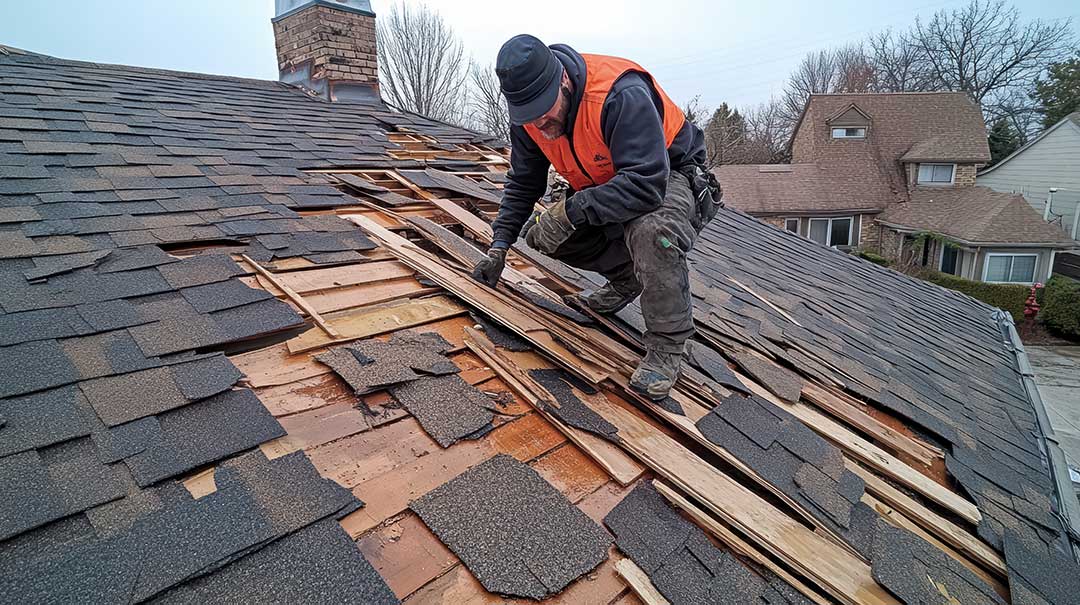
Protection may include tarps or coverings near walls, windows, landscaping, and exterior equipment. However, no setup can prevent every piece of debris from reaching the ground. Small shingle fragments and nails may travel beyond the main work area.
Residents should avoid walking barefoot around the property during and shortly after the project. Children and pets should also be kept away from debris until the ground has been checked and cleaned.
Inside the home, most roof tear-offs do not create major dust if the attic and interior are properly separated from the work area. Even so, older homes may experience minor dust or movement in the ceiling and attic.
What happens if rain or wind is in the forecast?
A roof tear-off is normally planned around a reasonable period of dry weather. Once roofing materials are removed, the exposed deck must be covered before rain reaches the structure.
Weather becomes especially relevant in Webster, MI, where sudden temperature changes, strong winds, snow, and spring or summer storms can interrupt exterior work. A short weather delay may protect the interior of the home and prevent moisture from becoming trapped beneath new materials.
Protective coverings can reduce risk, but they are not a permanent roof. If severe weather develops, the work area may be secured and the installation may pause until conditions are suitable.
Homeowners should understand how exposed areas will be covered overnight and what steps will be taken if weather changes unexpectedly.
How long does a roof tear-off take?
The tear-off portion may take part of a day or longer, depending on the roof’s size, pitch, accessibility, number of existing layers, and condition of the decking.
A simple roof with one layer of shingles and clear access may be removed relatively quickly. A roof with multiple layers, steep sections, dormers, attached structures, chimneys, or extensive repairs takes longer.
The full roofing project may continue beyond the tear-off because the sequence often includes:
- Removing old materials
- Inspecting and repairing the deck
- Installing underlayment and flashing
- Applying new roofing materials
- Completing ridge, edge, and ventilation details
- Performing final cleanup
The tear-off itself is only one stage, but it is the stage that most clearly reveals what the roof system is made of and how it has performed over time.
What should be checked after the work is finished?
A final inspection should include the roof surface, flashing, roof edges, valleys, vents, gutters, attic, and surrounding property.
Useful questions include:
- Were damaged deck sections repaired?
- Were exposed areas protected during weather delays?
- Were old nails and debris removed from the ground?
- Were gutters and downspouts cleared?
- Were vents, flashing, and edge details completed properly?
- Is there any visible damage to siding, trim, windows, landscaping, or outdoor equipment?
- Has the attic been checked for signs of moisture after the first significant rainfall?
A few leftover fragments may be found after the first cleanup, especially around landscaping or gravel. A careful final walk-through helps identify anything that still needs attention.
Is a tear-off always required?
Not always. In some situations, a new roofing layer may be installed over an existing layer if local requirements, roof condition, material limits, and the roof structure allow it. However, covering the existing surface prevents a complete inspection of the deck and may conceal water damage.
A full tear-off is more disruptive, but it allows the underlying structure and flashing conditions to be evaluated directly. The right approach depends on the roof’s age, number of existing layers, condition, ventilation, slope, and applicable building requirements.